


IELTS One Skill Retake in Uzbekistan (2026): Rules, Cost, How to Register
 Author: Eldor Sattorov⏱ 14 min read
Last checked against official British Council and IDP Uzbekistan pages on 11 November 2026. Rules and prices change, so always confirm the final details in your own Test Taker Portal or IELTS account before paying.
You sat IELTS. Listening 7.5, Reading 7.5, Speaking 7.0 and then Writing 6.0. Your target was 7.0 in every skill, and one section has just blocked a university offer, a scholarship or a visa. A few years ago the only answer was to pay for the whole test again. Today, in many cases, there is a smarter option: IELTS One Skill Retake (OSR).
This guide explains how it works in Uzbekistan, step by step: who can use it, how much to expect to pay, how to register with the British Council or IDP, what happens to your certificate, and how to decide whether it is worth it for you.
The short version
- What it is: you retake just one skill (Listening, Reading, Writing or Speaking) instead of the full test.
- Who can do it: candidates who have already taken a full IELTS on computer and received their results.
- Deadline: you must book and sit the retake within 60 days of your original test date.
- Limit: one skill, one attempt, per original test.
- Your certificate: you get a second Test Report Form (TRF) with your new score, your three original scores and a CEFR level. Your original TRF stays valid, and you choose which one to send.
- Price: the same for every skill, but neither the British Council nor IDP publishes the amount for Uzbekistan online. You see it when you book.
- Big warning: not every university or immigration office accepts OSR. Check before you pay.
What is IELTS One Skill Retake?
IELTS One Skill Retake lets you sit a single section again without redoing the other three. The format and timing are the same as that section in the normal test, so there is nothing new to learn. Your other three scores do not change.
It exists because IELTS punishes one bad hour harshly. A nervous Speaking test, an unlucky Writing topic or a few typing slips in Listening can pull one score down while the other three are exactly where you need them. OSR is designed for that situation.
Did you know?
- The retake can score lower. The official terms say the retake may give a different score for that skill, and that includes a lower one. The good news: you can choose to use your original TRF instead.
- Most people retake their weakest skill. IDP’s 2026 research on OSR found that candidates use it in a very targeted way, usually for their lowest-scoring skill.
- The fee does not depend on the skill. IDP Uzbekistan states that the price is the same for Listening, Reading, Writing or Speaking, with no separate registration fee, no payment-processing fee and no extra charge for last-minute booking.
- Your passport must match. IDP asks you to use the same valid passport you used for the original booking. A different passport can stop you from sitting the test.
- You only get one go. A maximum of one skill can be retaken per full test. If two skills are below target, you need a full test.
- The retake is visible on the certificate. The new TRF clearly marks the retaken score with the word “retake”, so any organisation reading it knows exactly what it is looking at.
Why do candidates take One Skill Retake?
These are the situations we see most often with candidates in Tashkent:
- One skill is half a band below the target. Example: 7, 7, 7 and 6.5 when the university wants 7.0 in each skill.
- Exam-day problems. Nerves in the Speaking room, a technical issue, a tough Reading passage, or running out of time on Writing Task 2.
- A deadline is close. Admission, a scholarship, a job offer or a visa application is waiting and a full retake feels too slow or too expensive.
- You know exactly what went wrong. The best OSR candidates can name the mistake: spelling in Listening, time in Reading, the overview in Task 1.
Who is it for, and who should skip it?
Good fit
- You took a full IELTS on computer and have your results.
- Exactly one skill is below your target and the other three already meet it.
- You are inside the 60-day window with enough time left to prepare.
- Your university, employer or immigration authority confirms in writing that it accepts OSR results.
Think twice or choose a full retake
- Two or more skills are below target. OSR cannot fix that.
- The organisation you are applying to does not accept OSR, or will not tell you.
- Your weak skill is only slightly below target and you are not sure why. A retake without a diagnosis often gives the same score.
- You are unsure about your overall level. In that case, test yourself first with a free IELTS level check.
The key rules at a glance
| Question | Answer |
|---|---|
| Which original test counts? | A full IELTS on computer taken at a centre that offers One Skill Retake. The British Council lists IELTS Academic, General Training and the UKVI versions on computer. Paper IELTS and IELTS Life Skills are not part of OSR. |
| How long do I have? | 60 days from your original test date. You must book and sit the retake inside this window. |
| How many skills? | One skill, one attempt, per original test. |
| Same centre? | IDP says an IDP test must be retaken at an eligible IDP centre. Expect the same logic with the British Council and confirm in your portal. |
| How long are results valid? | Two years from the original test date, as shown on the TRF. |
| When do I get the new result? | IELTS states 3 to 5 days for OSR results. Computer-based results in Uzbekistan often arrive faster, and the IDP Tashkent listing shows “Results in 1 to 5 days”. |
How much does it cost in Uzbekistan?
Here is the honest answer: there is no official published price for the retake in Uzbekistan. IDP Uzbekistan tells candidates the amount is the same for every skill, but the figure only appears when you start the booking. The British Council Uzbekistan page does not state it either.
For context, a full computer-based IELTS is currently around 2.7 to 2.8 million sum (the IDP Tashkent listing showed 2,800,000 sum for mid-November 2026 dates). In countries that publish both prices, an independent comparison by IELTSbiz found the retake costs roughly 58% to 76% of a full test. If Uzbekistan follows that pattern, a rough planning range would be about 1.6 to 2.1 million sum. Treat that as an estimate, not an official price, and check the real amount in your account.
Cancellation: IDP’s terms say that if you cancel an OSR at least 72 hours before the test start time, you receive a full refund with no administration fee. For British Council bookings, read the official One Skill Retake page and its linked cancellation policy.
Good to know for Uzbekistan: Kun.uz reports that the state reimbursement for IELTS 7.0 and above can be claimed once, for the last valid certificate, and does not cover retakes or partial results. Rules may have changed, so check my.gov.uz before relying on it.
How to register, step by step
Step 1. Get your original result first
You can only book OSR after you have received the score from your full test. On computer this usually takes a few days.
Step 2. Decide whether you need a remark first
If you think Listening, Reading or Writing was marked too low, an Enquiry on Results (EOR) may be the better first move. IDP Uzbekistan says an EOR for these skills must be submitted within two weeks of the test date, and you should wait for the remark status before registering for a retake on the same test. EOR is covered below.
Step 3. Check your centre offers OSR
In Uzbekistan, IDP’s four listed centres all support OSR: Edu Action in Tashkent, and the Edu Action computer-delivered centres in Bukhara, Termez and Urgench. The British Council page does not list cities, so confirm availability in your Test Taker Portal.
Step 4. Log in and click “Retake”
- British Council: log in to the Test Taker Portal, open your results, and click the “Retake” button next to the skill you want to improve.
- IDP: log in to your IELTS account, view your past test result and click “Retake” on the skill you want.
Step 5. Choose a date and pay
Pick an available date inside your 60-day window, pay online, and keep the confirmation email. It shows the location, date and time.
Step 6. Prepare for that single skill
This is where the retake is won or lost. See the preparation section below.
Step 7. Test day
Bring the same passport used for the original booking, arrive early, and sit only the skill you booked.
Step 8. Receive and choose your TRF
You get the new TRF. Decide which one to send to each organisation.
What happens to your certificate?
This is the most misunderstood part, so let us be precise. Your retake is not added onto your original certificate. Instead:
- You receive a new, separate TRF that shows your retake score, your three original scores and an overall CEFR level.
- Your original TRF remains and your original scores do not change.
- You choose which TRF to send. If the retake went worse, just keep using the original.
- The new TRF is marked as a One Skill Retake, with the word “retake” next to the new score.
- Validity is counted from the original test date, so the clock does not restart.
Ask IDP or the British Council for a sample TRF if you want to see exactly how it looks before booking.
Should you take it immediately after the main test?
Short answer: no need to rush, but do not wait either.
- You cannot book until your original results are out, so “immediately” really means “as soon as the result arrives”.
- Booking early matters because available dates and seats fill up, especially around admission and visa deadlines.
- But sitting it too soon without fixing the problem is the classic mistake. Give yourself two to four weeks of focused work on the one skill.
- Do not leave it to day 55. A bad date or a busy centre can push you outside the 60 days.
Worked example. You take IELTS on 1 November. The 60-day window ends on 31 December. Results arrive in a few days, you book a retake for around 1 December, and the new result arrives a few days later. That leaves a month of safety if something goes wrong. If your application deadline is 15 December, count backwards from it, including the time to send the TRF.
One Skill Retake vs Enquiry on Results vs a full retake
| One Skill Retake | Enquiry on Results (remark) | Full retake | |
|---|---|---|---|
| What happens | You sit one skill again | Your existing answers are re-marked | You sit all four skills again |
| Best when | One skill is clearly short and you can improve it | You believe the marking was wrong | Two or more skills are short, or OSR is not accepted |
| Timing | Within 60 days | Strict deadline, a few weeks at most | Any time |
| Risk | Retake may score lower, but you can keep the original TRF | Score can stay the same | Highest cost and effort |
On EOR details: the British Council says the fee is refunded if your results improve after the remark, and the refund request must be made within 30 days of the EOR publication date. Check the current policy on its website.
Is it worth it? A simple decision test
Answer these five questions honestly:
- Is only one skill below target?
- Do you know why you lost marks in that skill?
- Does your target organisation accept OSR results, confirmed in writing?
- Do you have at least three weeks inside the 60-day window to fix the weakness?
- Will the price be clearly lower than a full test when you see it in your account?
Four or five “yes” answers: OSR is usually a smart move. Two or fewer: stop and think, or book a full retake after proper preparation.
Who accepts One Skill Retake?
This is the single most important check. According to IELTS and IDP, the governments of Australia and New Zealand accept OSR results for visas, and the UK accepts it for UKVI purposes for Academic and General Training tests on computer at selected locations. Many universities accept it too, but acceptance varies by organisation and by application type.
- Check the British Council list of organisations accepting OSR and IDP’s article on which organisations accept it.
- For universities in Uzbekistan and abroad, email the admissions office and ask: “Do you accept an IELTS One Skill Retake TRF?” Keep the reply.
- Remember that the booking fee is usually not refunded if an organisation refuses the result.
How to prepare for a single skill
A retake is a short, targeted project. Start by reading how your weak skill is marked (see how IELTS is assessed), then work on the exact weakness.
- Listening: most lost marks are small: spelling, plurals and typing. Start with 10 tiny Listening mistakes and read how the computer-delivered exam works.
- Reading: practise Matching Headings and True / False / Not Given under time.
- Writing: work on the Task 1 overview and the Task 2 paragraph plan, and get a teacher to mark at least three full essays.
- Speaking: learn what examiners listen for in this guide and practise Part 2 for a full two minutes.
Take a mock IELTS before you pay for the retake
A computer-based mock shows you whether the weakness is fixed. At King’s Academy, our CD Mock IELTS runs on weekends at the main Alayskiy branch. The first mock is 150,000 sum, each next one is 50,000 sum cheaper, and the fourth is free. Read why it works in why you must try a mock before the real exam.
Use the free 30-day plan
If you have a month before your retake, our free IELTS 30-Day Plan gives you daily tasks for all four skills, mock tests on Days 7, 14, 21 and 28, and no registration. Finish at least 25 of the 30 days and claim a free CD Mock IELTS plus a free 10-minute speaking assessment with a teacher.
Common mistakes to avoid
- Booking the retake before finding out whether your university accepts it.
- Sitting the retake with no change in preparation.
- Using a different passport from the original booking.
- Waiting too long and missing the 60-day deadline.
- Submitting an Enquiry on Results and a retake at the same time, instead of waiting for the remark status.
- Sending the new TRF automatically without checking whether the original is better.
Official links and contacts
- British Council Uzbekistan: IELTS One Skill Retake (email: info@britishcouncil.uz)
- IDP IELTS Uzbekistan: One Skill Retake
- IDP test centres in Uzbekistan. Edu Action Tashkent: 3A Bunyodkor Avenue, +998 71 230 01 03, ielts@edu-action.uz
- IDP Uzbekistan: Enquiry on Results vs One Skill Retake
- IELTS.org: how OSR results are reported
King’s Academy is a partner of the British Council IELTS Partnership Programme. We are not an exam centre and we do not set prices: the test itself is run by the British Council or IDP. We can help you prepare and, as a partner, guide you through registration.
Frequently asked questions
Can I retake two skills with One Skill Retake?
No. One skill, once, per original test. For two or more skills you need a full test.
Can I retake after the 60 days?
No. Both booking and sitting must happen inside the 60-day window from your original test date.
Can I use OSR if I took a paper test?
No, OSR is for IELTS on computer. In Uzbekistan IELTS is currently offered on computer, so this rarely causes a problem here.
Will my overall score change?
The new TRF shows your retake score together with your three original scores and a CEFR level. Check a sample TRF for the exact layout.
Is the retake easier than the full test?
No. The format, timing and marking standard are the same as that skill in the normal test.
Can I choose a different test centre?
Often yes, if the other centre offers OSR and is run by the same provider. Check your account for the options.
Is it available for IELTS UKVI?
The British Council lists IELTS for UKVI (Academic and General Training) on computer among eligible tests. Confirm the current status with your centre.
Does King’s Academy take students for just one skill?
Yes. A teacher can diagnose your original result, build a short plan for the one skill, and test you with a CD Mock IELTS before you book.
What’s next?
Take the first step. It is free or takes two minutes:
Free IELTS level test →
Book a CD Mock IELTS →
Start the free 30-day plan →
Free trial lesson →
Already have your result? Check your IELTS results here.
Further reading on King’s Academy
- IDP vs British Council: where is IELTS easier?
- Computer-delivered IELTS: how the exam works
- IELTS 5.5 to 7.0: how long does it take?
- CD IELTS course at King’s Academy
What's next?
Take the first step — it's free or takes 2 minutes:
Other articles
Daily useful articles

Causes and Solutions Essays in IELTS: The 4-Paragraph Plan That Answers Both Questions
IELTS Task 2 causes and solutions essay: decode the question, the 4-paragraph plan, a solution for each cause, 10 collocations and a Band 7.5+ sample.

AI in IELTS Preparation: How Students in Tashkent Can Use AI Smartly Without Being Used By It
How to use AI for IELTS preparation in Tashkent: ready prompts for all 4 skills, traps to avoid, tips for parents and teachers, plus a quick quiz.
Corporate English for Employees: Why Companies Should Invest in It — A Guide for HR and Business Leaders
How corporate English (ESP, Business English) improves employee loyalty, growth and efficiency: formats, launching a programme in 6 steps, KPIs for HR and real client feedback for…

What an IELTS Speaking Examiner Really Listens For (and What They Ignore)
A former IELTS examiner explains what really affects your Speaking score: accent, opinions, memorised answers, plus a simple plan for this week.

Computer-Delivered IELTS: How the Exam Works
How CD IELTS works in Tashkent: the screen layout, notes, word counter, the typing speed you need and how it differs from paper-based IELTS.
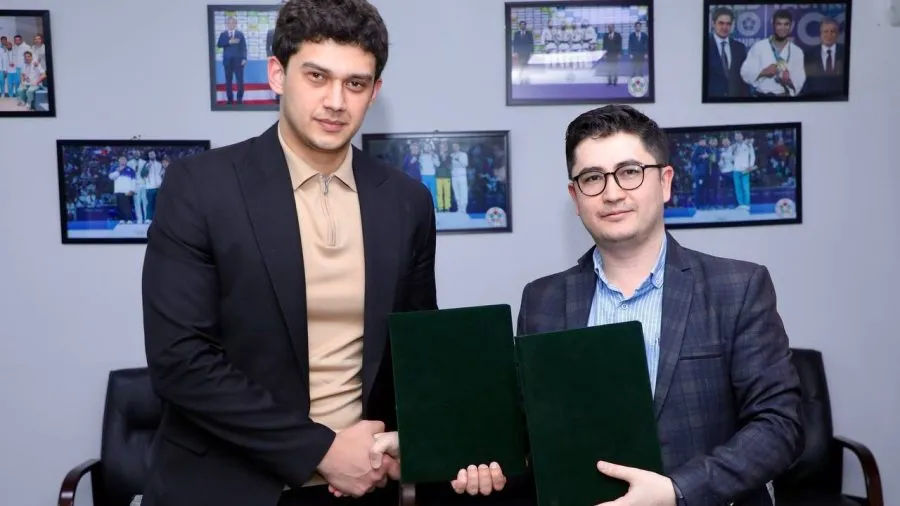
King’s Academy Signs Memorandum with the Uzbekistan Judo Federation: English for Uzbek Judokas
King’s Academy has signed an official memorandum with the Uzbekistan Judo Federation to teach English to Uzbek judokas, helping them communicate with international coaches,…
Submit a request
Do you want to sign up for classes or become part of our team?
Request submitted
We will contact you within the working day.