


How Long Does It Take to Learn English from Zero to IELTS?

In short: going from zero to IELTS 6.0 usually takes 1.5–2 years, and to IELTS 7.0 about 2–2.5 years. That assumes lessons 3 times a week plus homework. According to Cambridge English, reaching B2 from zero takes roughly 500–600 hours of teaching and supervised study, and reaching C1 takes 700–800 hours (Cambridge English). You can go faster by studying more intensively. But “from zero in 2 months” isn’t possible.
Timelines by level
The figures below assume a typical schedule: three 90-minute lessons a week plus about 4 hours of homework. That’s around 8 hours a week, or 35 hours a month.
| Level | What you can do | IELTS (approx.) | Hours from zero | Time at 8 h/week |
|---|---|---|---|---|
| A1–A2 (Beginner–Elementary) | Simple phrases, everyday topics | too early to take it | ~180–200 | 5–6 months |
| B1 (Pre-Intermediate–Intermediate) | Get by in most situations | 4.0–5.0 | ~350–400 | 10–12 months |
| B2 (Upper-Intermediate) | Speak and read freely on general topics | 5.5–6.5 | ~500–600 | 15–18 months |
| C1 (Advanced) | Study and work confidently in English | 7.0–8.0 | ~700–800 | 20–24 months |
What shortens the timeline: more hours a week, English at school, films and series without subtitles in your language, daily practice. What lengthens it: summer breaks, missed lessons, studying without homework, switching centres and methods too often.
Keep in mind that you’ll often need another 2–4 months of focused preparation for the IELTS format itself. Knowing the language and knowing the exam aren’t the same thing.
“From zero to IELTS 7.0 in 2 months”: why it isn’t true
You’ll often see ads like this on Instagram and Telegram. Let’s do the honest maths: 2 months is about 8 weeks. Reaching 700+ hours would mean studying 12 hours a day with no days off. Even at that pace, your brain simply can’t absorb that much vocabulary and grammar.
How to spot dishonest advertising:
- They promise a specific band “from zero” in under a year.
- They “guarantee” a score without checking your level.
- There’s no placement test or mock exam.
- They show other people’s certificates without the student’s name or starting level.
- They promise “secret templates” instead of real language skills.
What’s actually realistic in 2 months: raising your band by 0.5–1.0 if you already have a foundation (for example, from 5.5 to 6.5–7.0). That’s exactly who intensive courses help. If you’re starting from zero, you need to learn the language itself first.
An honest centre always starts with a test and tells you the real timeline, even if you don’t like it.
🎧Check your real band this weekend — CD Mock IELTS: 150,000 sum, each next one 50,000 cheaper, 4th free →Self-study or a course?
You can do a lot on your own: learn words, listen, read. But three things are almost impossible without a teacher:
- Speaking. You need a real person to correct your mistakes and pronunciation.
- Writing. It’s hard to see your own mistakes in an essay.
- Consistency. A schedule, homework and a group keep you from quitting halfway. Most people who start learning a language online on their own give up within a few weeks.
The best option is a course and self-study together. In class you speak and get feedback; at home you build up volume.
Free tools for self-study
| Tool | What it’s for | Level |
|---|---|---|
| LearnEnglish (British Council) | Grammar, vocabulary, audio and video by level | A1–C1 |
| BBC Learning English | Listening, pronunciation, the “6 Minute English” podcast | A2–C1 |
| Write & Improve (Cambridge) | Automatic feedback on your writing | A1–C2 |
| Anki or Quizlet | Flashcards for learning vocabulary | any |
| ChatGPT and similar AI tools | Speaking practice, explaining difficult words and grammar | B1+ |
| IELTS Ready (British Council) and IELTS by IDP | Official IELTS practice tests | B2+ |
A simple rule: 20–30 minutes every day does more than 3 hours once a week. AI is useful for practice, but it sometimes makes mistakes and doesn’t replace a teacher.
How we teach at King’s Academy
King’s Academy is a learning centre in Tashkent and an official British Council partner. We’ve been teaching since 2015, and more than 15,000 students have studied with us. Our path from zero to IELTS is built in clear stages.
The student’s path:
- A free placement test — so you know exactly where to start.
- General English — from Beginner to Upper-Intermediate, using Oxford University Press course books.
- CD IELTS course — preparation for the exam format on computer.
- IELTS 7.0+ intensive — for students who already have 5.5–6.0.
- CD Mock IELTS every weekend — to see your real score before the actual exam.
What makes the learning effective:
- Oxford University Press course books. A proven system where each level builds on the last. For children, we use Family & Friends.
- Blended learning. We keep what works: books, notebooks and live interaction in class. We add digital tools for practice at home, and prepare students for IELTS on computers. This mix gives better results than learning only online or only from books.
- Small groups of 6–12 students. Everyone speaks in class instead of just listening.
- Teachers with IELTS 8.0–8.5. They’ve taken the exam themselves and know it from the inside.
- Speaking club and Movie club. Extra speaking practice outside lessons.
- Regular tests. You and your parents see real progress, not just paid hours.
Programmes and fees (all courses):
| Course | Format | Fee |
|---|---|---|
| General English | 3 times a week, 90 minutes | 900,000 UZS per month |
| English for kids | 3 times a week, 90 minutes | 900,000 UZS per month |
| English for adults (25+) | 90 minutes | 900,000 UZS per month |
| CD IELTS course | 2–4 months, computer-based format | 1,000,000–1,600,000 UZS per month |
| CD Mock IELTS | 4 hours, at weekends | 150,000 UZS |
FAQs
How long does it take to learn English from zero to IELTS? On average, 1.5–2 years to IELTS 6.0 and 2–2.5 years to 7.0, with lessons 3 times a week plus homework.
Can I learn English in 3 months? In 3 months from zero you can master the basics: simple phrases, the most common words and the main tenses. That isn’t enough for IELTS.
Can I learn faster? Yes, by studying more intensively: 15–20 hours a week roughly halves the timeline. But that pace is hard to keep up alongside school or work.
How many hours a week should I study? At least 6–8 hours: lessons plus 20–30 minutes of self-study every day.
At what level can I start preparing for IELTS? From Intermediate (B1). Starting earlier doesn’t make sense, because you first need to build vocabulary and grammar.
When should a child start learning English? The earlier the better: children start comfortably at 6–7. A child who starts at 7–8 will be well prepared for IELTS by the senior school years.
Can I learn English on my own? Partly, yes: vocabulary, reading, listening. For speaking and writing, you need a person who corrects your mistakes.
Which is better: online or offline? A blended format: live lessons in class plus digital practice at home. Students who learn this way are less likely to quit and start speaking sooner.
How can I check my level? Take a free placement test at King’s Academy. If you’re already Intermediate or above, take a CD Mock IELTS to find out your score in each skill.
How much do English courses at King’s Academy cost? General English is 900,000 UZS per month, the CD IELTS course is 1,000,000–1,600,000 UZS per month, and a CD Mock IELTS is 150,000 UZS.
Start with a free trial lesson
Come for a free placement test and trial lesson. We’ll tell you honestly how long it will take you to reach your goal.
📲 +998 90 900 79 66 · Telegram @kingsacademy_uz · kings.uz
Our branches in Tashkent:
| Branch | Address | Phone |
|---|---|---|
| Alayskiy | Kashgar area (C-4), behind the Ardus and Credit-Asia shops, Abdulla Qodiriy metro · Yandex Maps · Google Maps | +998 90 900 79 66 |
| Buyuk Ipak Yuli | 77 Buyuk Ipak Yuli Street · Yandex Maps | +998 94 413 09 00 |
| Yunusabad-19 (Sayram) | 44 Yangi Yunusabad Street · Yandex Maps | +998 99 225 88 88 |
Instagram | Telegram | YouTube | LinkedIn | Site | Facebook | TikTok
Sources
- Guided learning hours — Cambridge English
- IELTS scoring in detail — ielts.org
- Guided Learning Hours — LanguageCert
Already taken IELTS? Check your IELTS results →
What's next?
Take the first step — it's free or takes 2 minutes:
Other articles
Daily useful articles

How to Write a Strong CV in Uzbekistan: What Employers Look For, 7 CVs That Get Rejected and a Free CV Builder
How to write a strong CV in Uzbekistan: what employers check first, 7 CV mistakes with examples, ready AI prompts and a free online CV builder with PDF.
How Much Does IELTS Preparation Cost in Tashkent in 2026? Course and Exam Prices
How much IELTS costs in Tashkent in 2026: the official exam fee, course prices, your total budget and practical ways to save money.
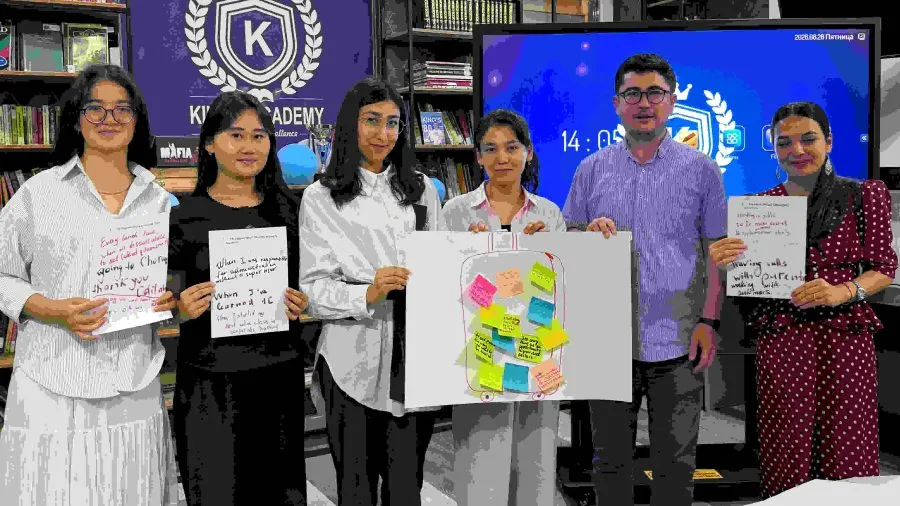
King’s Academy and American Councils YPIP: Five Years of Launching Young Professionals in Uzbekistan
What Is the American Councils Young Professional Internships Program (YPIP)? The Young Professional Internships Program (YPIP) is run by American Councils for International…

Best IELTS Preparation Centres in Tashkent: A 2026 Guide
King’s Academy has run a dedicated IELTS preparation programme since 2015, built directly around the experience of its founder, Eldor Sattorov, who has been personally studying,…

How to Get IELTS 7.0+ Through Self-Study: A Realistic, No-Nonsense Roadmap
Can you get IELTS 7.0 without a teacher? A realistic self-study roadmap: daily habits, a 12-week plan, free resources and how to stay disciplined to the end.

“River” or “Rivers”? 10 Tiny IELTS Listening Mistakes That Lower Your Band (From Real Tashkent Mock Results)
10 small IELTS Listening mistakes that cost marks: spelling, plurals, word limits, numbers and blanks. 30 commonly misspelt words and a free audio test.
Submit a request
Do you want to sign up for classes or become part of our team?
Request submitted
We will contact you within the working day.